
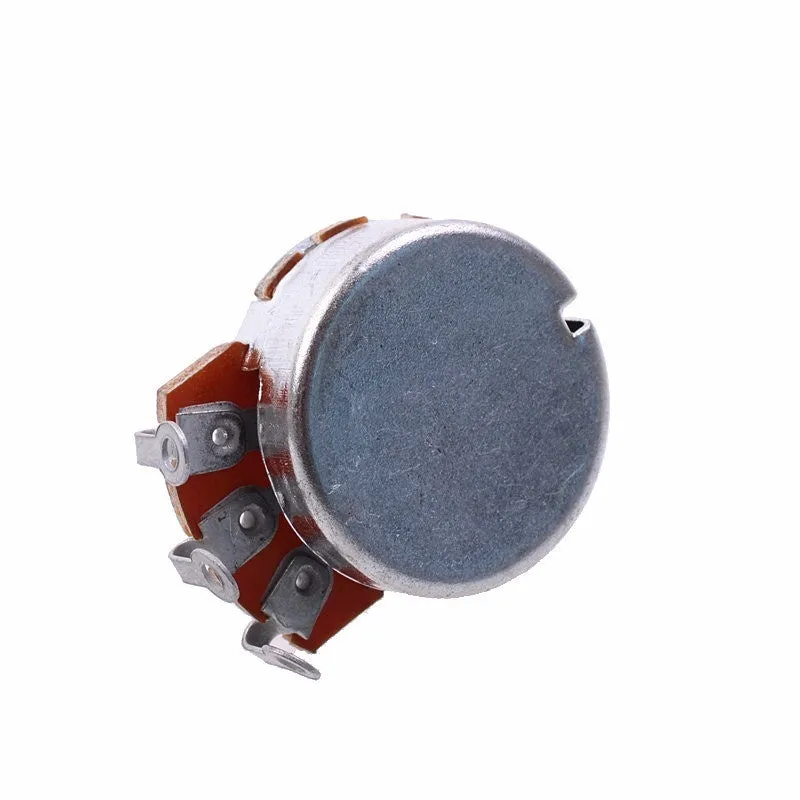
Single electric guitar tone or volume potentiometer knob with precision 250K or 500K resistance value selection for customised control of amplifier signal routing and pick-up response.
B500K Volume
£10.98
Sale price
£10.98
Regular price
Skip to product information

 This single electric guitar potentiometer knob is a fundamental component for managing your instrument's output. It allows you to choose between a 250K or 500K ohm resistance value, each creating a specific electrical load in your guitar's circuit. This selection is critical for optimising the performance of your pick-ups; a 250K pot typically suits single-coils to prevent an overly bright tone, while a 500K pot is standard for humbuckers to maintain a full frequency response. The knob is designated for either tone (A) or volume (B) control, ensuring correct integration into your guitar's existing wiring harness or new custom build for targeted sonic adjustment.
 The functionality of this component is defined by its electrical specification and physical construction. It is not a cosmetic accessory but an active part of your guitar's circuitry, where material choice and design impact performance and longevity. The following details break down the specific aspects that contribute to its role in your signal chain.
 This potentiometer knob serves a specific technical purpose in various guitar-related contexts. Its value is realised in practical scenarios, from routine maintenance to deliberate tonal crafting. Understanding these applications helps in selecting the correct variant for your needs.

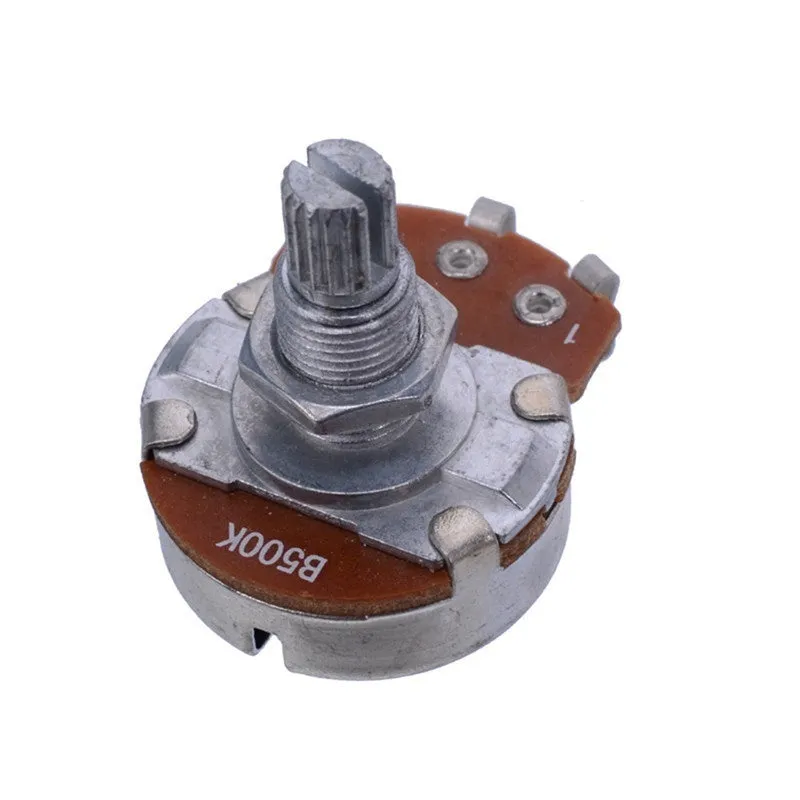
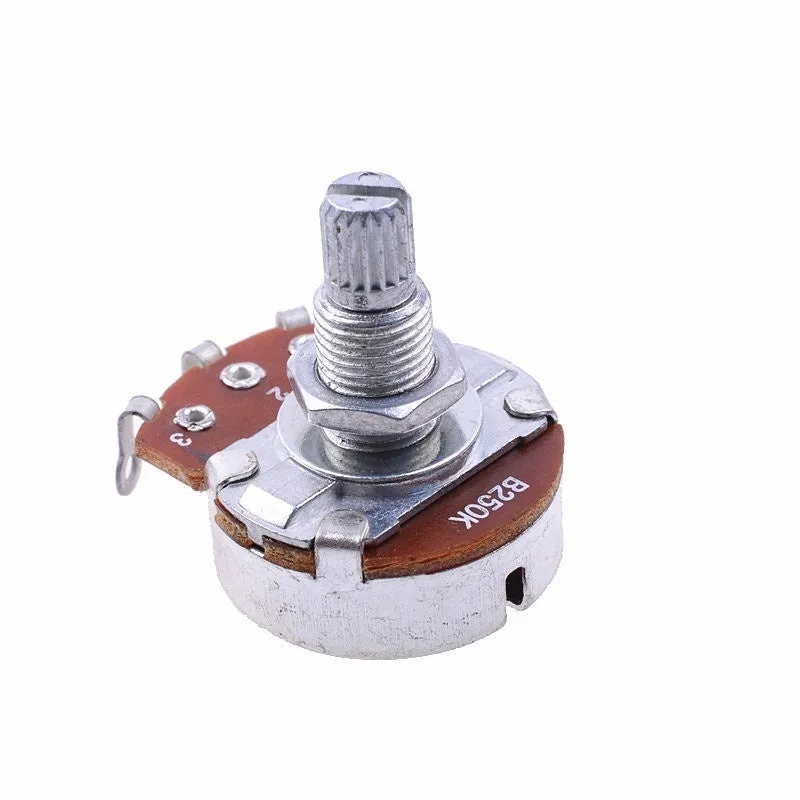


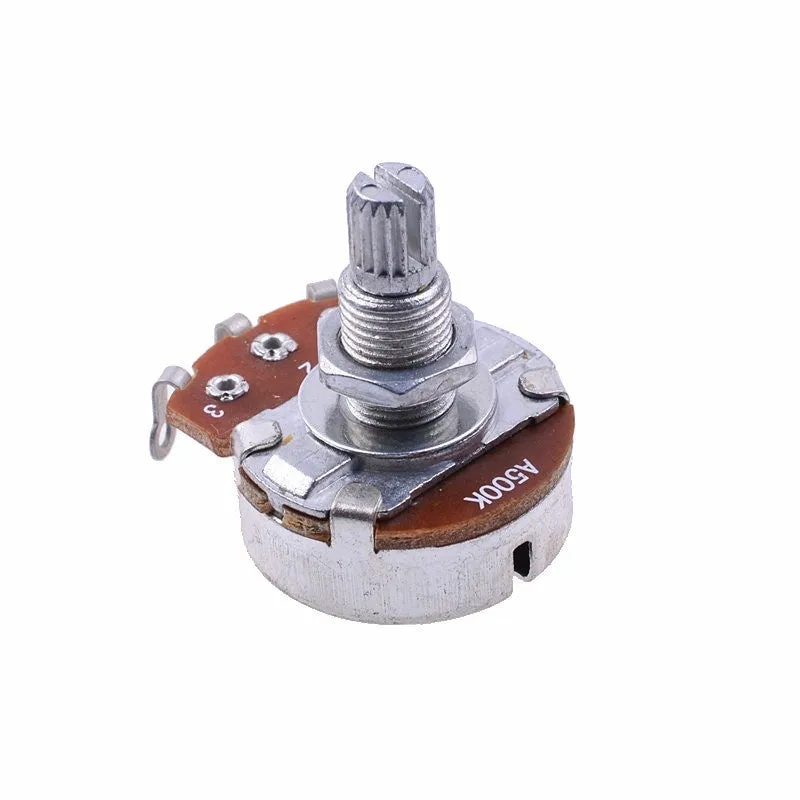
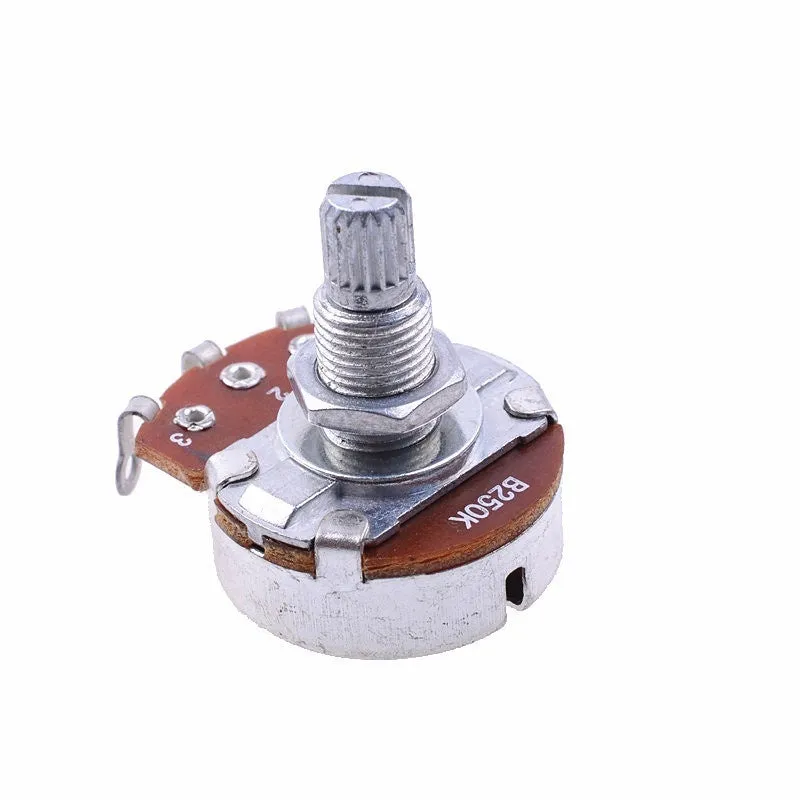


Single electric guitar tone or volume potentiometer knob with precision 250K or 500K resistance value selection for customised control of amplifier signal routing and pick-up response.
£10.98
Sale price
£10.98
Regular price
Electric Guitar Potentiometer Knob: Select 250K or 500K Resistance for Precise Tone and Volume Control
Features and Build Quality of the Guitar Control Knob
Resistance and Function Configuration
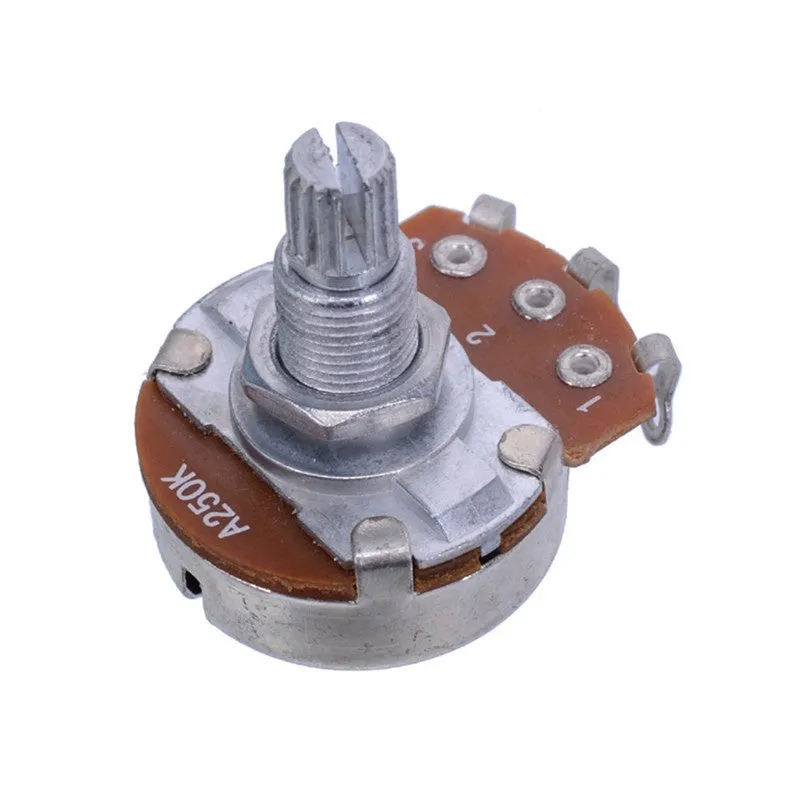
The knob is offered in four distinct variants: A250K Tone, A500K Tone, B250K Volume, and B500K Volume. The 'A' and 'B' designations refer to the potentiometer's intended use in a standard audio taper, with 'A' being the logarithmic taper commonly used for tone controls to provide a smooth roll-off, and 'B' being the linear taper typically used for volume controls. The 250K and 500K values specify the total resistance of the potentiometer, which directly affects the guitar's tone by loading the pick-ups differently, allowing you to match the component to your specific pick-up type for optimal sound.Metal Construction and Durability
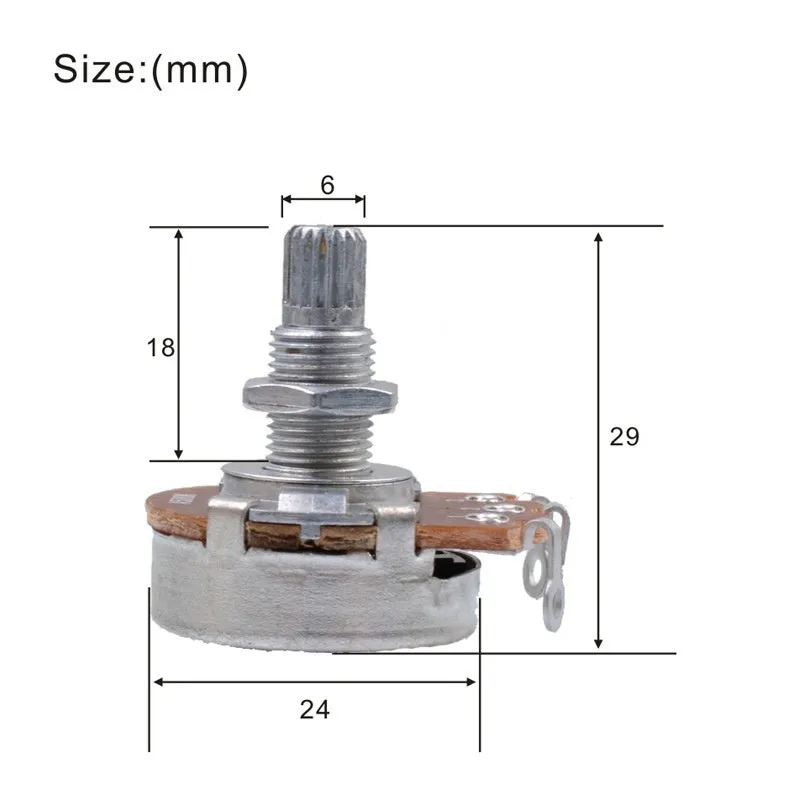
Compatibility and Installation Design Designed for compatibility with standard electric guitar potentiometer shafts, this knob facilitates a straightforward installation or replacement process. It is a direct-fit component for many common electric guitar models, requiring no modification to your instrument's pickguard or body. This plug-and-play aspect makes it suitable for both repair scenarios, where a worn pot needs replacing, and for customisation projects where you wish to upgrade or alter your guitar's control specifications for a tailored playing experience.Practical Applications for Guitarists
Professional Guitar Setup and Repair
For luthiers and guitar technicians, having the correct replacement potentiometer on hand is essential for servicing instruments. A common issue in older guitars is a scratchy or inconsistent pot, which can be resolved by installing a new one with the matching resistance value. Using a 500K pot to replace a failing unit in a Les Paul, for example, restores the intended high-end response of its humbucking pick-ups, while fitting a 250K pot in a Stratocaster maintains the characteristic sparkle of its single-coils without introducing harshness.Everyday Tone Shaping for Players
Versatility in Custom Guitar BuildingMeasurable Benefits and Long-Term Value Investing in the correct electronic component has a tangible impact on your instrument's performance and your ownership experience. The benefits extend beyond the initial installation, contributing to the guitar's functionality and reliability over years of use.Value Through Correct Specification
Satisfaction from Reliable PerformanceFinal Reason for Purchase</h3 If you are replacing a faulty potentiometer, modifying your guitar's tone circuit, or building an instrument from parts, selecting this knob with the specific resistance and function you require is a necessary step. It is the direct link between your hands and your guitar's electronic voice. Choosing the metal-built, correctly specified variant ensures the modification or repair is done once, correctly, giving you lasting control over your instrument's output level and tonal character for the long term.