
USB Development Board with Integrated Keyboard: ATMEGA32U4 Microcontroller for Embedded Systems Programming and Hardware Prototyping Projects
ATMEGA32U4
£20.98
Sale price
£20.98
Regular price
Skip to product information

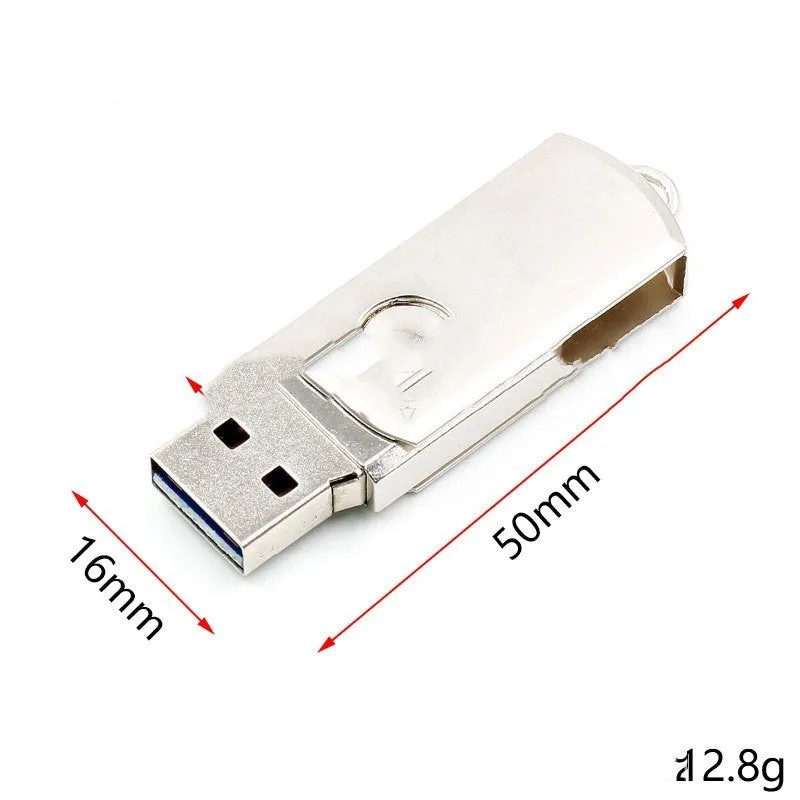
 This USB development board combines an ATMEGA32U4 microcontroller with a physical keyboard interface on a compact 50mm by 16mm PCB. It is designed to simplify the embedded development process by providing direct input capabilities and standard USB connectivity without external hardware. The board serves as a practical tool for creating custom control interfaces, educational projects, or rapid prototypes where a dedicated input method is required. Its plug-and-play nature, facilitated by the integrated USB interface, allows developers to focus on coding and system logic rather than peripheral setup.
 This section details the specific technical attributes and construction elements that define this development board's functionality and reliability for hardware projects.
 The integration of a microcontroller and keyboard opens up specific use cases across different skill levels, from hobbyist projects to professional prototyping.
 Using this integrated board provides measurable advantages in time, cost, and project complexity compared to sourcing and wiring separate components.


USB Development Board with Integrated Keyboard: ATMEGA32U4 Microcontroller for Embedded Systems Programming and Hardware Prototyping Projects
£20.98
Sale price
£20.98
Regular price
ATMEGA32U4 USB Development Board: Integrated Keyboard for Streamlined Embedded Systems Prototyping
Features and Build Quality of the Development Board
Compact PCB Design and Dimensions
The board utilises a compact double-sided PCB measuring 50mm in length and 16mm in width. This small form factor is achieved through surface-mount technology (SMT), which places the ATMEGA32U4 microcontroller and supporting components directly onto the board, minimising the overall footprint. The 1.6mm thick fibreglass substrate provides necessary rigidity while keeping the profile low, making it suitable for embedding into final project housings or using as a minimal bench tool during the development phase.ATMEGA32U4 Microcontroller Specifications
At the core of the board is the ATMEGA32U4 microcontroller, which operates at 5V logic levels and features 32KB of flash memory, 2.5KB of SRAM, and 1KB of EEPROM. Its integrated full-speed USB 2.0 controller is a key technical aspect, enabling the board to be recognised as a standard serial (CDC) or HID (Human Interface Device) like a keyboard or mouse without additional ICs. The microcontroller's 16MHz clock speed supports the standard data rate communication necessary for uploading code and serial debugging via the onboard USB connection.Durable Solder Mask and Component Mounting
Quality is evident in the application of a solder mask over the entire PCB, which protects the copper traces from environmental factors and prevents accidental solder bridges during manual modifications. All components, from the microcontroller to the decoupling capacitors, are machine-soldered using RoHS-compliant, lead-free solder. This process ensures strong electrical connections and long-term durability, allowing the board to withstand repeated plugging, unplugging, and handling typical in a development environment.Practical Applications for Developers and Makers
Professional Prototyping and Tool Development
For professional engineers, this board acts as a rapid prototyping platform for custom human-machine interfaces (HMIs). It can be programmed to function as a dedicated input device for test equipment, a programming keypad for industrial controllers, or a configuration tool for other embedded systems. The standard USB connectivity allows it to be quickly integrated into existing development toolchains, and the small size means it can be built into mock-ups or proof-of-concept models without redesigning the enclosure to accommodate a separate keyboard.Everyday Learning and Hobbyist Projects
For students and electronics hobbyists, the board offers a tangible, hands-on way to learn about microcontroller programming, USB protocols, and input device design. The tactile feedback of the onboard keys, contrasted with purely software-based simulations, provides a more engaging learning experience. Programming the keys to trigger specific actions—like lighting an LED, sending a serial command, or controlling a motor—helps solidify understanding of embedded system logic and I/O handling, making abstract concepts more concrete.Versatility in Custom Device Creation
The board's versatility extends to creating niche or bespoke devices. It could be programmed as a macro pad for software shortcuts, a simple game controller, or a secure authentication token with a physical key sequence. By leveraging the ATMEGA32U4's ability to emulate different USB device classes, a single board can be repurposed for multiple projects simply by uploading new firmware, offering excellent value and reducing the need for multiple specialised development kits.Tangible Benefits for Your Development Workflow
Long-Term Value and Cost Efficiency
The board represents a cost-effective solution by bundling the microcontroller, USB interface, and input method into one ready-to-use unit. This eliminates the separate purchase of a programmer, USB-to-serial adapter, and external keypad, which can collectively cost significantly more. Its durability means it can be reused across countless projects as a permanent part of a development setup or as a temporary tool, providing a high return on investment for anyone regularly working with microcontrollers.User Confidence Through Integrated Design
The integration fosters confidence during development, as the physical keyboard provides immediate, reliable feedback for user input tests. The peace of mind that comes from knowing the USB connection and basic I/O are handled by a single, tested chip (the ATMEGA32U4) allows developers to concentrate on higher-level application code rather than debugging communication protocols or driver issues. This reliable foundation is crucial when meeting project deadlines or demonstrating a prototype's functionality.Streamline Your Next Hardware Project
If your current workflow involves juggling multiple cables, adapters, and peripherals just to test basic input on a microcontroller, this board consolidates those needs. By providing a 50mm by 16mm platform with a direct USB link and programmable keys, it removes setup friction. Incorporate it into your next prototype to reduce component count, simplify enclosure design, and accelerate the iteration cycle from initial code to a working hardware demonstration.