
Desktop dual-axis belt sander for knife sharpening and polishing, featuring a 750W motor and variable speed from 1000 to 7000 rpm for precise material removal and finishing on wood or metal.
Blue / 110V US
£243.98
Sale price
£243.98
Regular price
Skip to product information

 Introductory paragraph: The desktop dual-axis belt sander transforms workshop tasks like knife sharpening, tool refurbishment, and material finishing. Its core feature is the continuously variable transmission switch, granting direct control over the abrasive belt's speed within a 1000 to 7000 rpm range. This allows craftsmen to match the tool's aggression to the material, preventing heat damage to delicate metals or providing the power needed to shape hardened steel. Powered by a reliable 750W motor and built with a compact, stable design, this sander is engineered for precision and endurance in demanding hobbyist and professional environments.
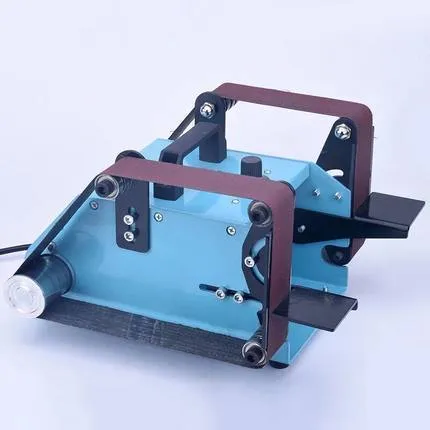 This section details the specific engineering and material choices that contribute to the sander's performance and durability in a workshop setting.


Desktop dual-axis belt sander for knife sharpening and polishing, featuring a 750W motor and variable speed from 1000 to 7000 rpm for precise material removal and finishing on wood or metal.
£243.98
Sale price
£243.98
Regular price
Desktop Dual-Axis Belt Sander: Variable Speed Control from 1000 to 7000 rpm for Sharpening and Polishing
Features and Build Quality of the Bench Sander
Dual-Axis Sanding Design
The dual-axis design provides two primary working orientations, allowing you to sand flat surfaces along one plane and access edges or contours from another angle without repositioning the entire workpiece. This is facilitated by the 40mm wide by 680mm long abrasive belt, which offers a substantial contact area. The design reduces set-up time and increases workflow efficiency for complex shaping tasks common in blade sharpening or wooden model making.Variable Speed Motor Performance
The 750W electric motor delivers consistent power, ensuring the belt maintains speed under load during heavy material removal. The technical standout is the speed range of 1000 to 7000 rpm, controlled via the continuously variable switch. For example, shaping a hardwood handle might utilise 4500 rpm for a smooth cut, while deburring a soft aluminium part could require 2000 rpm to avoid clogging the belt. This precise adjustability is the key to achieving different surface finishes from coarse to polished.Robust Construction and Safety
Practical Applications for Workshop and Hobby This versatile tool finds use in numerous scenarios, from professional sharpening services to weekend DIY projects, thanks to its adjustable power and compact form.Professional Tool Maintenance
For carpenters, metalworkers, or chefs, maintaining a sharp edge is non-negotiable. This sander allows professionals to quickly re-profile a chipped plane iron or hone a kitchen knife to a razor edge. The variable speed is crucial here; a lower speed with a coarse belt can repair significant damage, while a high speed with a fine-grit belt can produce a polished, burr-free edge that lasts longer and performs better, directly impacting work quality and tool longevity.Everyday Crafting and Restoration
Versatility Across MaterialsTangible Benefits and Long-Term Value Investing in this tool brings measurable advantages in results, efficiency, and cost-saving over time, moving beyond simple task completion.Cost-Effective Workshop Upgrade
User Confidence and Consistent ResultsA Practical Investment for Precision Work Choosing this sander means selecting a tool defined by control and adaptability. The measurable benefit is the reduction in time and effort spent on finishing tasks, achieved through the variable speed and dual-axis design. For anyone serious about woodworking, metalcraft, or tool maintenance, it represents a direct upgrade that brings professional-level precision within reach, enabling you to execute detailed work that was previously difficult or inconsistent with more basic equipment.