
Lithium battery charging and protection integrated board with 5V input, 4.2V charge cut-off, and 3A overcurrent protection for reliable power management
Blue
£5.98
Sale price
£5.98
Regular price
Skip to product information

 This integrated management board provides a complete solution for using 3.7V lithium-ion or lithium-polymer batteries in your projects. It combines a charging circuit that accepts 5V input with a protection circuit that guards against over-discharge and excessive current draw. The board's compact 2.6cm by 1.7cm footprint makes it suitable for embedding into portable devices, DIY electronics, or backup power systems where reliable and safe battery operation is essential.
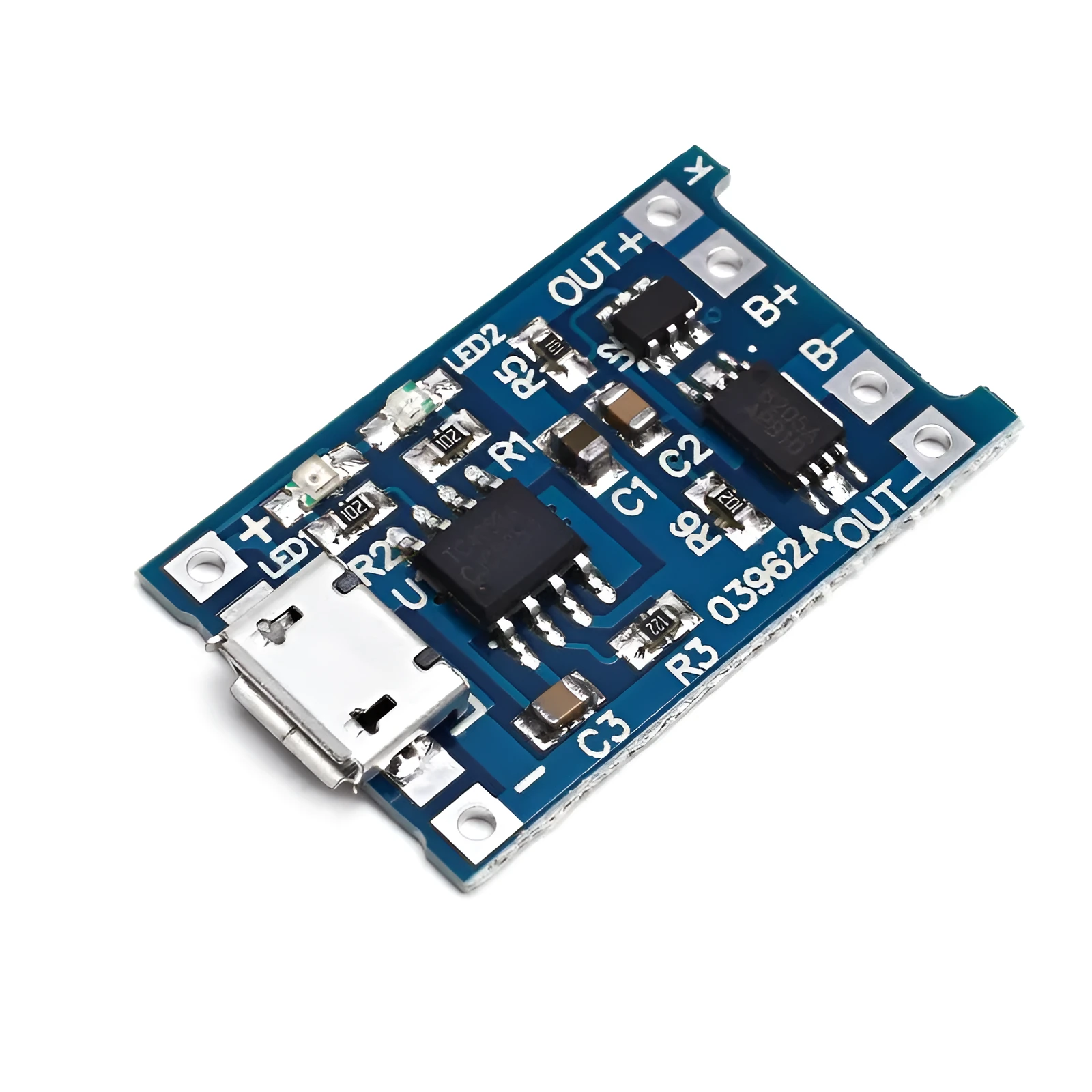 This section details the precise electrical parameters and physical construction of the lithium battery management board. Each specification is engineered to handle the specific requirements of single-cell lithium battery chemistries, providing both functionality and essential safety features in one unit.
 This management board is designed for integration into a wide range of electronic projects that are powered by a single 3.7V lithium cell. Its primary role is to add essential charge management and safety features to designs that would otherwise require separate, discrete components.
 Investing in a dedicated management board like this provides measurable benefits over simpler, unprotected power solutions. It extends the usable life of your lithium batteries and adds a critical layer of safety to your projects.


Lithium battery charging and protection integrated board with 5V input, 4.2V charge cut-off, and 3A overcurrent protection for reliable power management
£5.98
Sale price
£5.98
Regular price
Lithium Battery Charging and Protection Board with 5V Input and 3A Overcurrent Safety
Features and Technical Specifications
Charging Circuit Design
The onboard charging controller is configured for a 5V DC input, compatible with the vast majority of USB chargers and power banks. It regulates the current flowing into the battery, with a maximum rate of 1000mA. The charging process is automatically terminated when the battery voltage reaches the precise cut-off point of 4.2 volts, with a manufacturing tolerance of just ±1%. This accuracy is crucial for preventing overcharging, which can degrade battery capacity and pose a safety risk over time.Protection Circuitry Performance
The integrated protection circuit performs two key monitoring functions. It continuously checks the battery voltage during discharge, and will disconnect the load if the voltage falls to 2.5V, preventing the harmful deep discharge that can permanently damage a lithium cell. Simultaneously, it monitors the current flowing from the battery to the load. If this current exceeds 3 amps, the protection circuit will open, safeguarding the battery's internal structure and the connected device from the high temperatures and potential damage caused by a short circuit or faulty component.Board Construction and Quality
The circuit is implemented on a 2.6cm by 1.7cm fibreglass PCB, a standard material chosen for its durability and stable electrical properties. All active and passive components are mounted using surface-mount technology (SMT), which allows for the dense, compact layout. This construction method typically offers good mechanical strength and reliability for the solder joints. The board features clearly labelled solder pads for the input, battery, and output connections, simplifying integration into your project.Practical Applications and Use Cases
Professional and DIY Electronics
For engineers and hobbyists building custom portable devices—such as data loggers, sensor nodes, or handheld test equipment—this board removes the complexity of designing lithium battery management from scratch. By handling the charge cycle and protection, it allows the designer to focus on the core functionality of their device. The 3A overcurrent protection is particularly valuable in prototypes or small-batch production, where a wiring error could otherwise lead to a damaged battery or a safety incident.Everyday Consumer Device Repair and Modding
This board is a practical component for repairing older gadgets where the original charging circuit has failed, or for adding battery backup to devices that lack it. The physical experience of integrating it is straightforward, involving soldering a few wires to the clearly marked pads. The reassurance of knowing the connected battery has protection against being drained too low or subjected to a short circuit adds significant peace of mind, a direct benefit of the 2.5V cut-off and 3A current limit engineered into the board.Versatility in Power Solutions
Beyond standard device power, the board's configuration allows for versatile setups. It can be used to create a standalone "smart" charger for individual lithium cells. Alternatively, its output can power a voltage booster module to provide 5V or other voltages, creating a managed battery power bank. The compact size means it can be fitted into surprisingly small enclosures, making it ideal for space-constrained projects like wearable technology or miniature robotics.Key Benefits and Long-Term Value