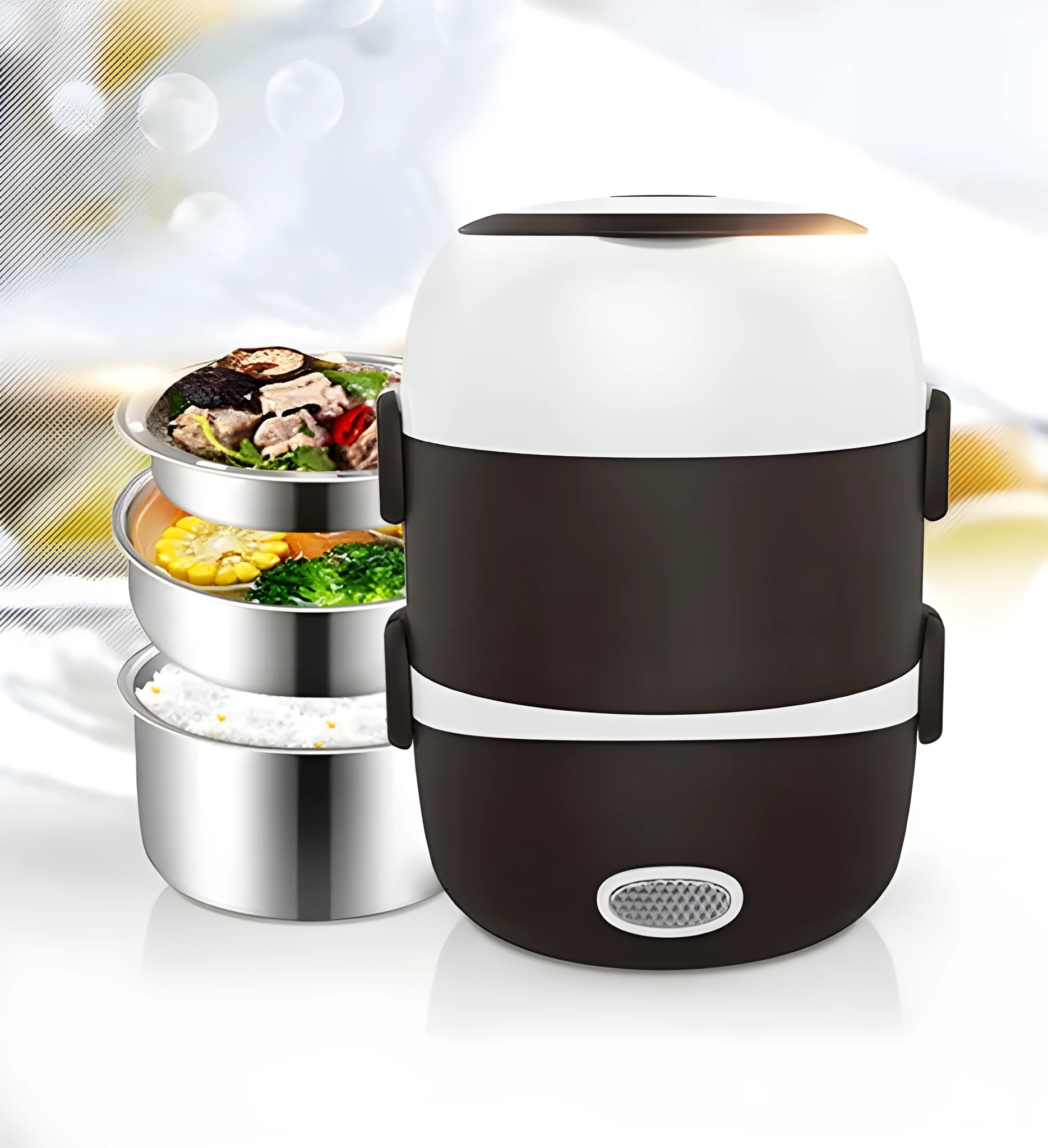
Multi-function lunch box with electric heating, 200W power, USB power mode, 2L and 1.3L capacity options in two-layer or three-layer configuration for hot food storage and transport


Multi-function lunch box with electric heating, 200W power, USB power mode, 2L and 1.3L capacity options in two-layer or three-layer configuration for hot food storage and transport
USB-Powered Electric Lunch Box with 200W Heating in 2L or 1.3L Capacities

Keeping food warm on the go can be a challenge, whether at the office, during travel, or in outdoor settings. This multi-function lunch box provides a practical solution with its integrated electric heating element, eliminating the need for access to a microwave. Designed for portability, it utilises a USB power mode, making it compatible with common power sources like laptop power banks, car USB ports, or standard USB wall adapters. With two distinct capacity options—a generous 2L version and a more compact 1.3L model—it caters to different meal sizes, from individual lunches to meals meant for sharing.
Features and Construction
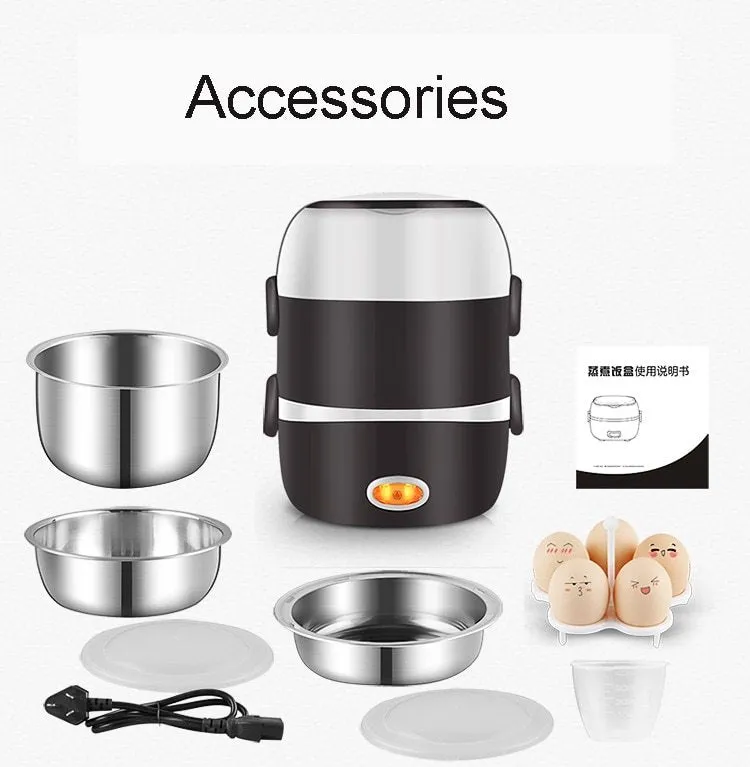
This lunch box is defined by its core function: electrically heating food. Its construction integrates a heating system into a portable container, built around practical specifications that determine its performance and use.
Material and Build
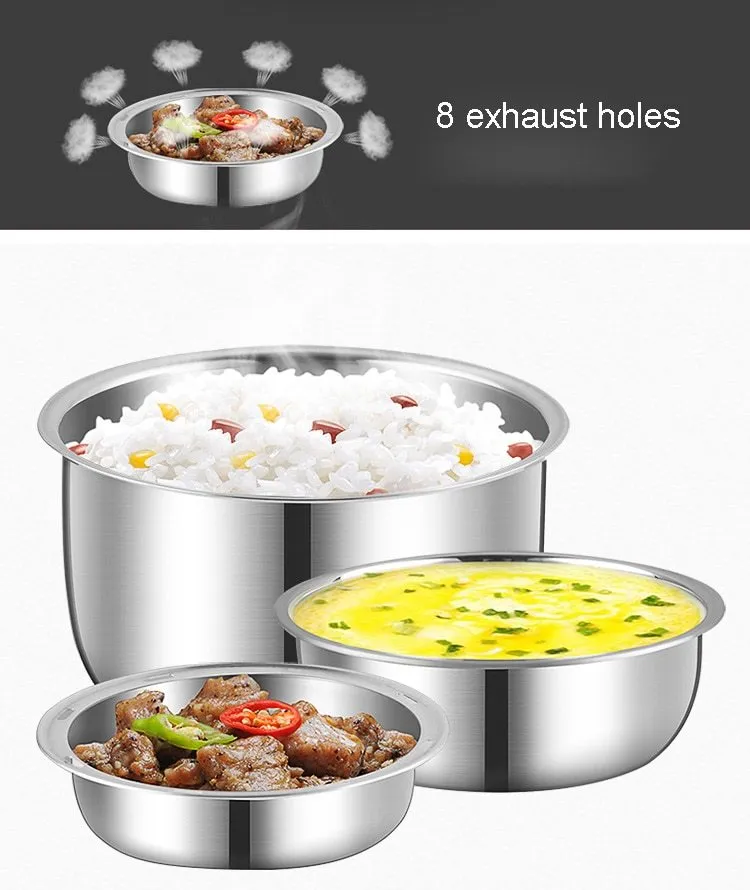
The lunch box features a plastic housing that forms the primary food compartments. This material choice contributes to a lighter weight for transport. The build incorporates the necessary electrical components to support the 200W rated heating element and the USB power input interface. The design offers either a two-layer or three-layer configuration, which refers to the stacking of the food compartments within the unit.
Size and Practical Fit
The physical dimensions and capacity are key differentiators. The two-layer model is specified to measure 190mm in width, 190mm in depth, and 190mm in height, resulting in a cubic form factor with a 1L internal capacity. The three-layer model offers a larger 2L total capacity, though its exact external dimensions are not provided in the source. The choice between these sizes allows users to select a lunch box that fits their bag or backpack and meets their typical food volume needs.
Uses and Placement

The USB power mode fundamentally shapes where and how this lunch box can be used, moving it beyond traditional insulated containers and into scenarios where active heating is required.
Event or Professional Use
In professional environments like offices, workshops, or for shift workers without kitchen access, this lunch box enables a hot meal using a desk power bank or a USB-C laptop charger. Its electric function makes it suitable for all-day events, markets, or trade shows where vendors might need to keep food warm for sampling. The 200W power rating indicates a capability to heat contents effectively, though heating times will depend on the connected power source's output.
Everyday Home Use
For home use, it serves as a convenient way to keep a meal warm for a family member on a different schedule or to transport a hot dish to a neighbour or friend. The USB connectivity means it can be plugged into a standard phone charger adapter at home before a journey. The two capacity sizes cater to different household needs: the 1.3L option for a single person's meal and the 2L option for a larger portion or a meal for two.
Benefits and Buying Value
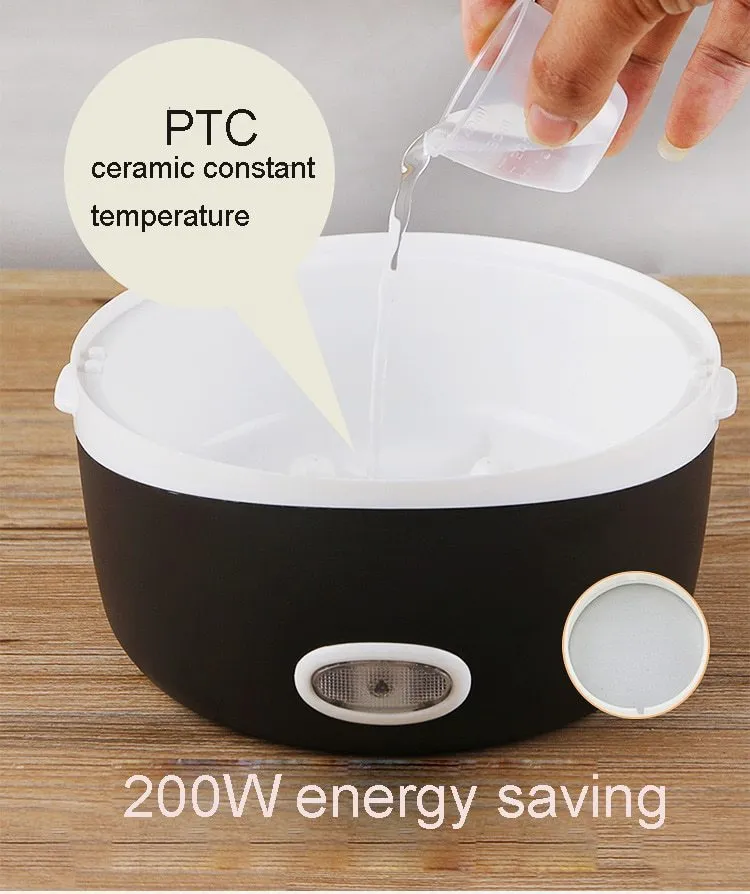
The value of this product lies in its specific combination of heating technology, power flexibility, and size options, addressing a clear niche in food storage and transport.
Reuse and Low Maintenance
As a reusable electric appliance, it replaces the need for single-use solutions to keep food warm. The plastic food compartments are designed for repeated washing. Maintenance is centred on basic care: wiping clean and ensuring the USB port remains free of debris. Its operation does not require disposable components, aligning with ongoing use over time.
Why Choose This Product
This lunch box is chosen for its concrete, source-supported features: the electric heating function, the USB power mode that works with ubiquitous power sources, and the clear choice between two stated capacities (2L and 1.3L) and two physical constructions (two-layer or three-layer). It is selected not for vague benefits but for these measurable specifications that solve the specific problem of portably heating food without a mains-powered kitchen appliance.