
WiFi development board based on ESP-8266EX, Arduino compatible for programming with Arduino IDE, featuring 11 I/O pins, 1 ADC pin, onboard 5V 1A switching power supply, OTA wireless upload capability, and black finish.


WiFi development board based on ESP-8266EX, Arduino compatible for programming with Arduino IDE, featuring 11 I/O pins, 1 ADC pin, onboard 5V 1A switching power supply, OTA wireless upload capability, and black finish.
ESP-8266EX WiFi Development Board: Arduino-Compatible with OTA Updates and Onboard Power
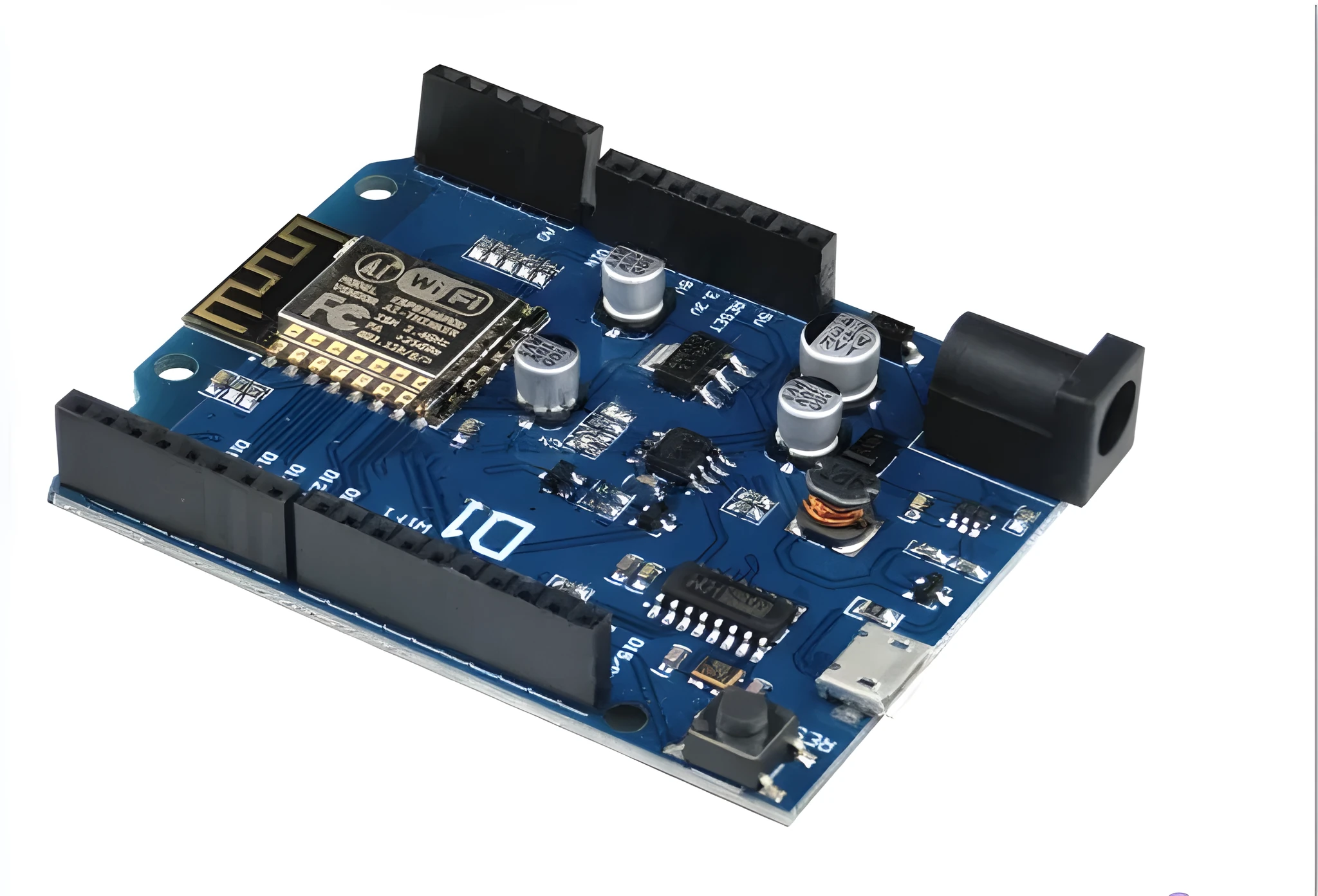
This WiFi development board centres on the popular ESP-8266EX module, providing a capable foundation for Internet of Things prototypes and connected device projects. It integrates seamlessly with the Arduino development environment, allowing you to write, compile, and upload code using the familiar Arduino IDE. Once the necessary hardware package is installed, it operates with the same workflow as an Arduino UNO, making it an accessible step up for adding wireless connectivity. The board also supports Over-the-Air (OTA) programming, enabling you to update firmware wirelessly without a physical USB connection, which is ideal for deployed devices. An onboard switching power supply further streamlines development by delivering 5V at 1A from a wide input range.
Features and Construction

This board is built around core specifications that provide practical utility for electronics projects.
Material and Build
The board is constructed using standard electronic components and a printed circuit board (PCB) typical for development hardware. Its design is focused on functionality, with the ESP-8266EX chip providing the integrated WiFi capability. The inclusion of an onboard 5V 1A switching power supply, which accepts a maximum input voltage of 24V, is a key construction feature that reduces the need for external power regulators in many projects.
Size and Practical Fit
While specific dimensions are not provided, the board's layout includes 11 digital I/O pins and 1 analogue-to-digital converter (ADC) pin. The ADC pin accepts an input voltage range of 0 to 3.3V, which is standard for the ESP-8266's operating voltage. This pin configuration offers sufficient interfaces for connecting sensors, actuators, and other peripheral components commonly used in prototyping.
Uses and Placement
This development board is suited for a range of applications, from hobbyist projects to more advanced prototyping.
Event or Professional Use
For professional prototyping or educational workshops, the board's Arduino compatibility lowers the learning curve. Developers can leverage existing Arduino code libraries and tutorials, while the OTA update feature allows for remote management of demonstration units or installed sensor nodes. The robust power supply supports a variety of connected components without immediate need for additional hardware.
Everyday Home Use
For home automation enthusiasts and DIY makers, this board serves as a central component for creating smart home devices, such as WiFi-connected sensors, controllers for lights, or data loggers. The ability to program it via the Arduino IDE makes it accessible, and the OTA functionality means a device can be updated after being installed in a hard-to-reach location.
Benefits and Buying Value
The value of this board lies in its integrated features that address common development hurdles.
Reuse and Low Maintenance
The board is designed for reuse across multiple projects. Its standard pin headers allow components to be connected and disconnected easily. The OTA update capability significantly reduces maintenance effort for long-term projects, as firmware can be refined without physical access to the board.
Why Choose This Product
Choosing this board provides a complete, integrated solution for adding WiFi to projects. It combines the ESP-8266EX's connectivity with the user-friendliness of the Arduino ecosystem, the convenience of an onboard power supply, and the modern advantage of wireless programming. This combination saves time and reduces component count during the prototyping phase.